Exploring Mangroves Around the World
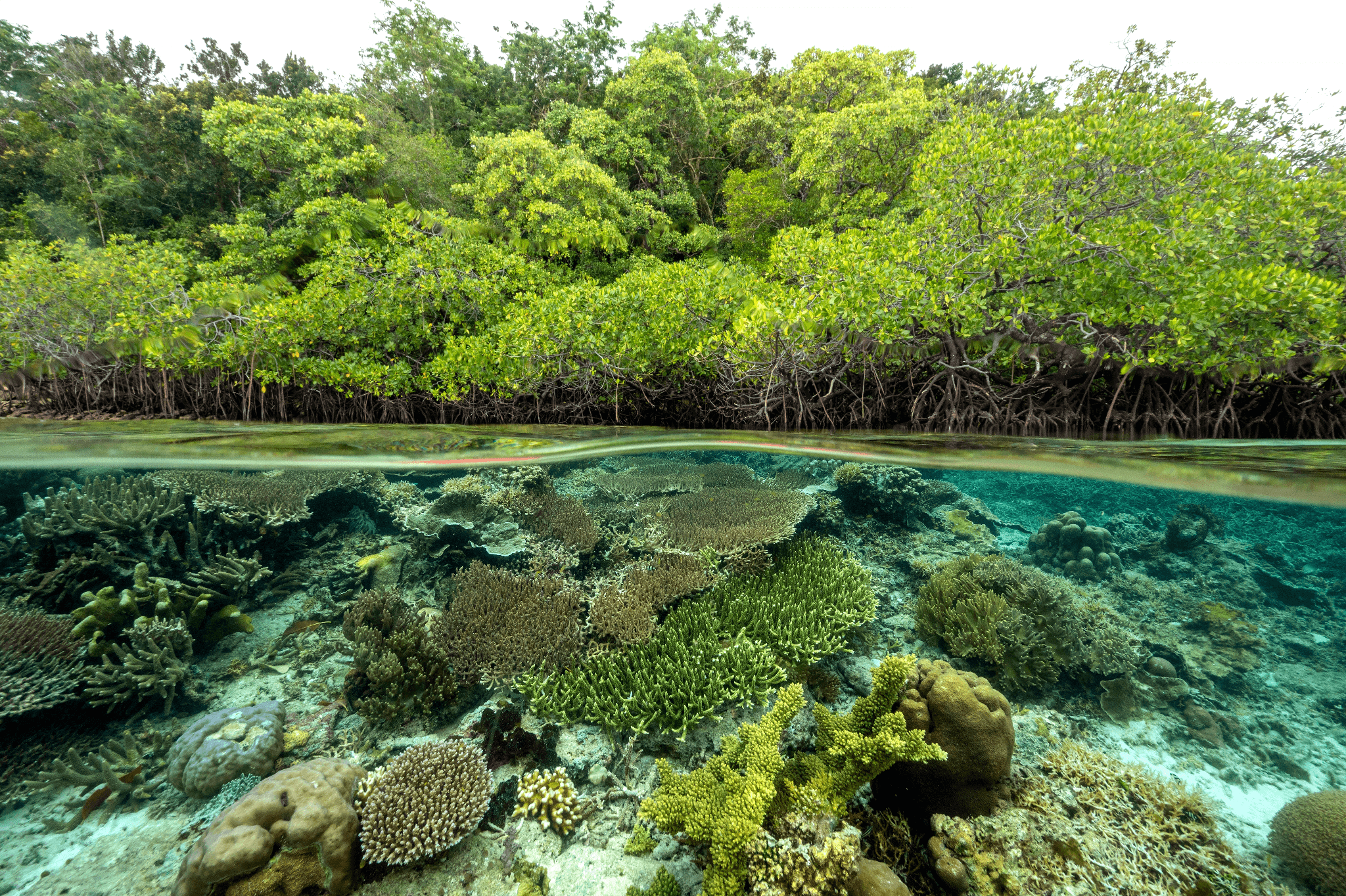
One of Earth’s most resilient organisms, mangrove trees are nothing short of an ecological marvel. Their lush, lime-green leaves and tangled root thickets stretch on for miles along tropical shores and riverbanks. Often overshadowed by coral reefs or rainforests, the mangrove swamp holds a humbler allure than its colorful tropical cousins—at least at first glance. But beneath a tunneled canopy, surrounded by the birdsong and blissful calm of a mangrove-lined channel, it's clear that what may appear as monoculture is bursting with biodiversity.
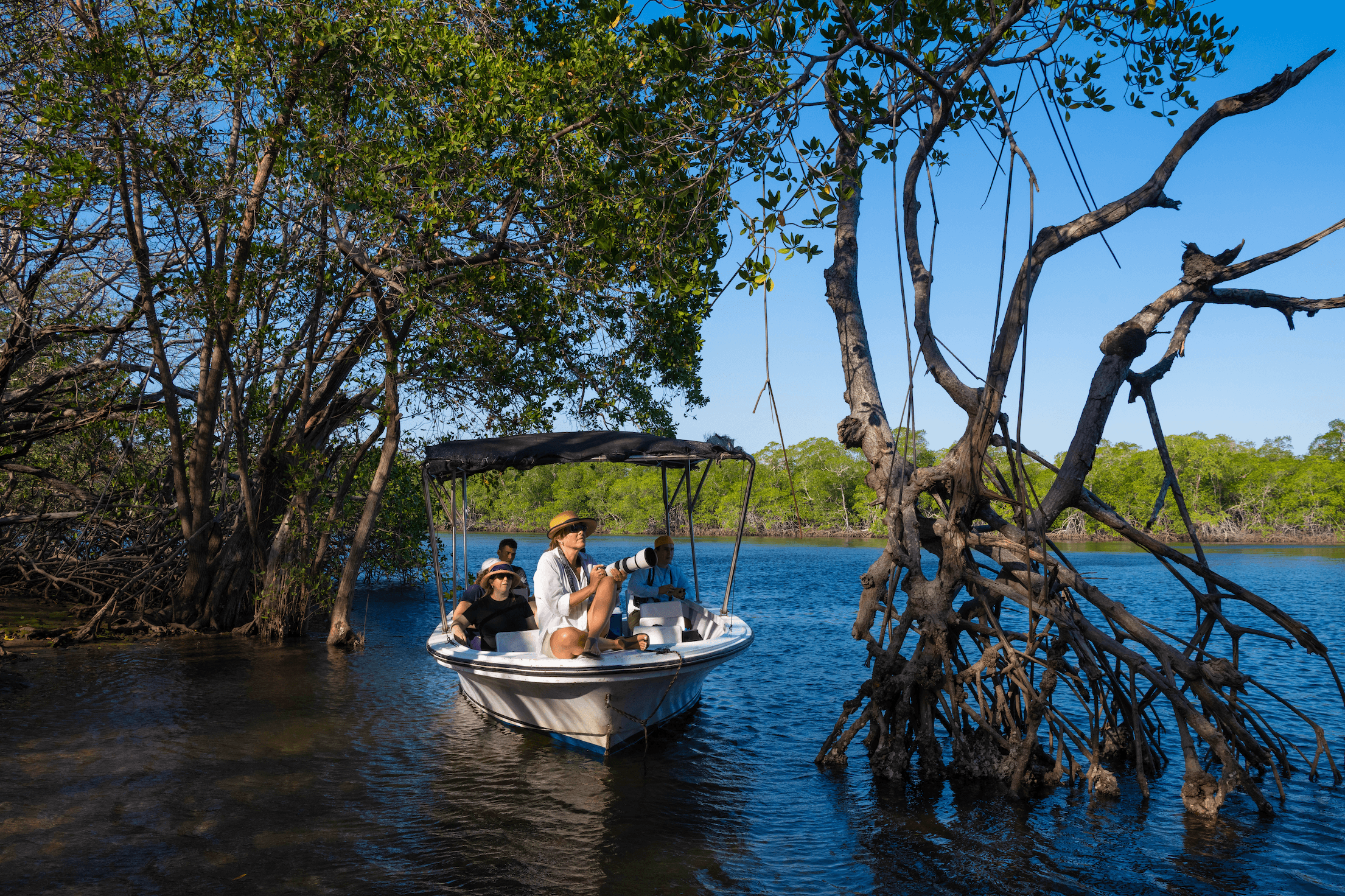
Photo: David Vargas
Even mangroves themselves aren’t a single species; the moniker applies to more than 80 different evergreens that have adapted to thrive in salt-saturated intertidal zones. Their complex root systems allow them to withstand the daily double-floods of seawater, which would quickly suffocate most other plants. As ecosystem engineers, mangrove swamps alter their habitat, creating submerged sanctuaries where an estimated three-quarters of all tropical fish are born. On land, an extraordinary variety of birds, reptiles, and invertebrates depend on these habitats for the health of their species. And, as scientists continue to confirm, so do we.
Why Mangroves Are So Important
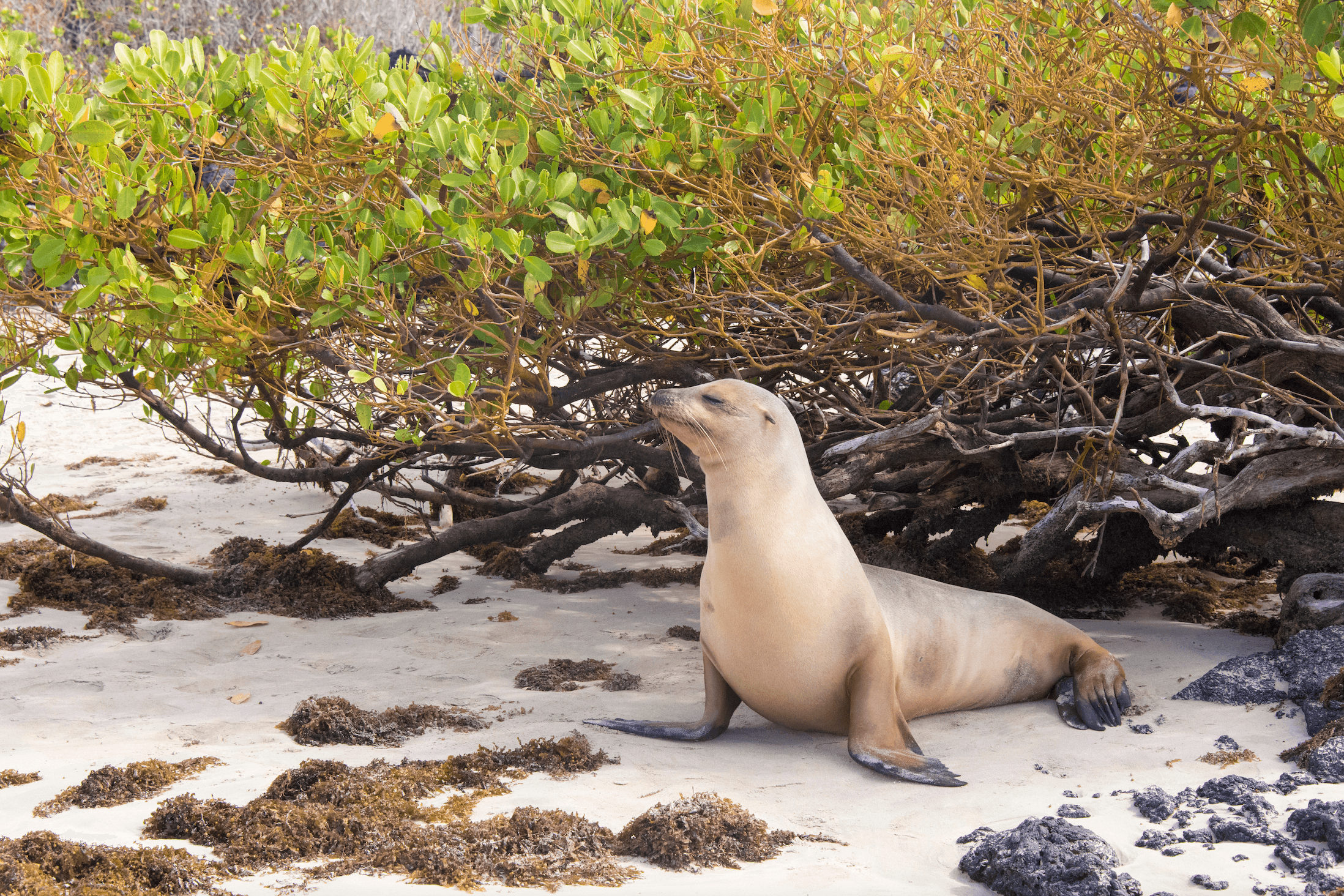
For centuries, mangroves have propped up the economy and ecology of coastal communities around the world, providing livelihoods for people who share their shores and standing guard against erosion, tsunamis, and severe storms. In recent decades, researchers have discovered these fascinating flora have also been holding up the front lines in the global fight against climate change. They’re able to store up to five times more carbon than tropical rainforests, at a faster rate, and more securely, packed into an underground vault that will hold as long as the forest does. Unfortunately, this timeline has continued to shrink as development, aquaculture, and pollution threaten our increasingly rare mangrove ecosystems. The time for us to turn the tide is now, starting with sharing the story of just how essential these ecosystems are.
To witness the peculiar magic of mangroves and the immensities of life they sustain, head to these five seaside spots that have been shaped by their roots.
Galápagos, Ecuador
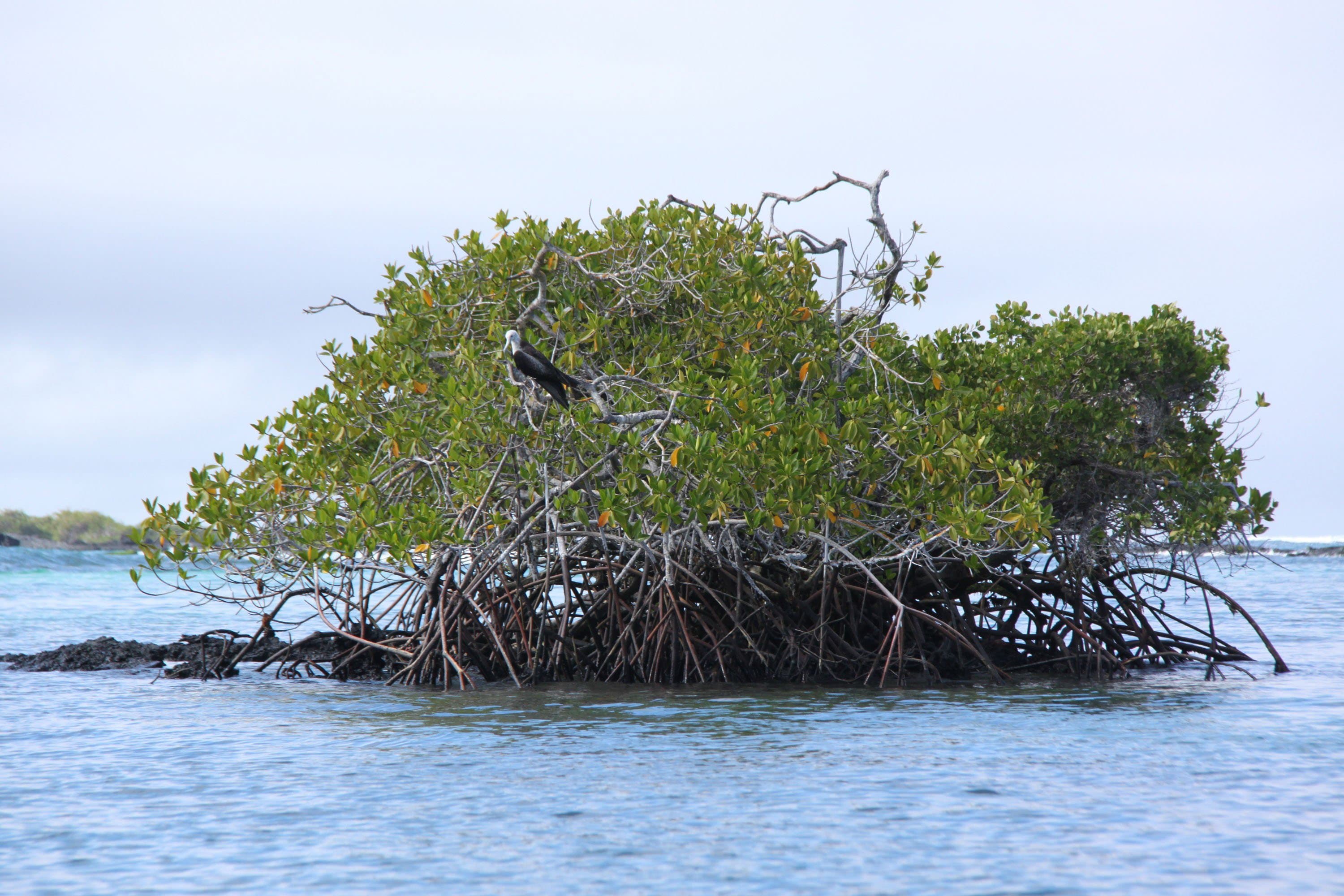
Galápagos is one of the few places where mangrove forest coverage is growing without need for human intervention, transforming stark coastal lava fields into vibrant forest enclaves. It’s especially fascinating to encounter all four of the most common forms. Red mangroves have stilted aerial roots, or prop roots, that can take hold out in the open sea. Farther ashore, black mangroves are known for sprawling underground networks of root snorkels, called pneumatophores, which poke up through the mud to help the tree breathe. White mangroves and button mangroves both prefer higher, drier ground. To filter seawater, these shrubs “sweat” out the salt, dotting their thick leaves with crystals.
Guanacaste, Costa Rica
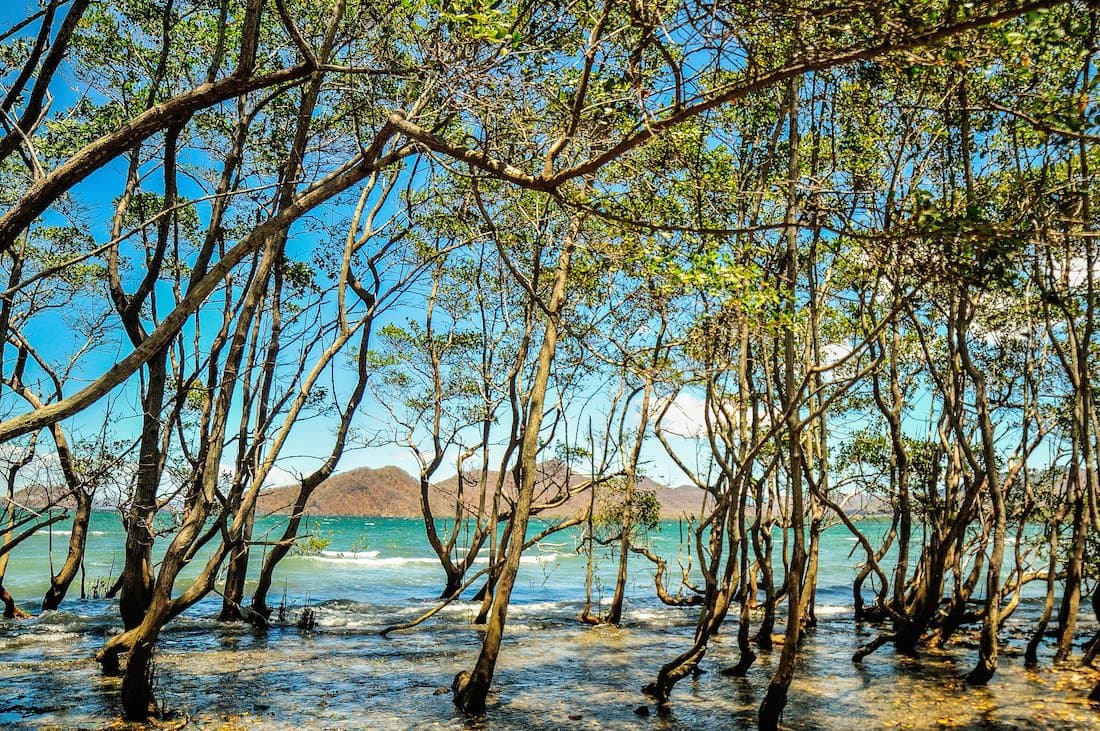
In line with Costa Rica’s reputation as a conservation leader, this northwestern province upholds a long legacy of natural stewardship. Guanacaste Conservation Area has been a UNESCO World Heritage Site since 1999; and within it, the country’s first national park, Santa Rosa, was established in 1971. In Santa Elena Bay, which scoops into the park’s north shore, the effects of such deeply dedicated investment are breathtaking. The mangroves stretch for miles, glowing a sun-saturated green as far as the eye can see, interrupted only by pristine beaches and inlets where parrot calls beckon you in for adventure.
Magdalena Bay, Baja California
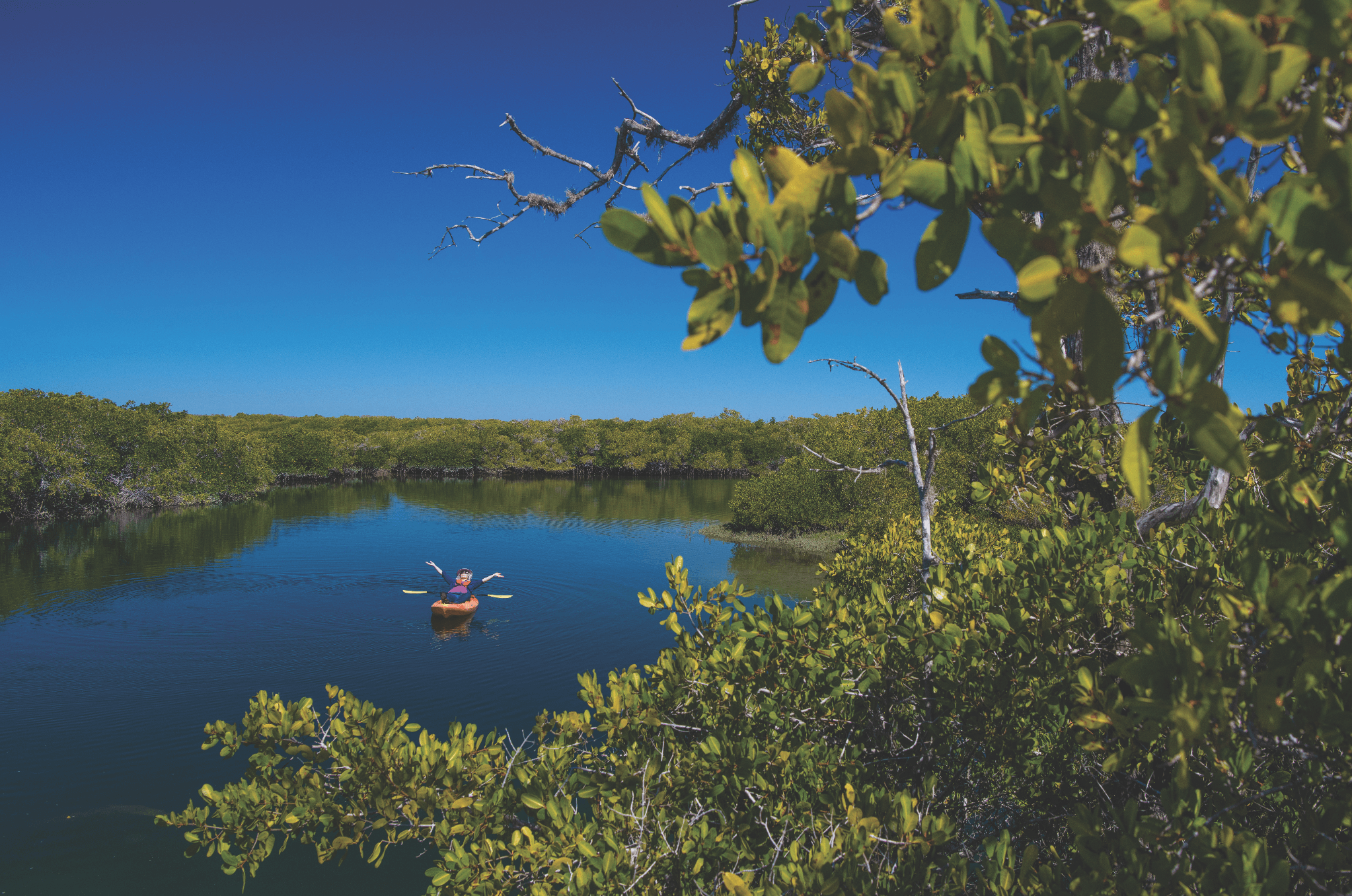
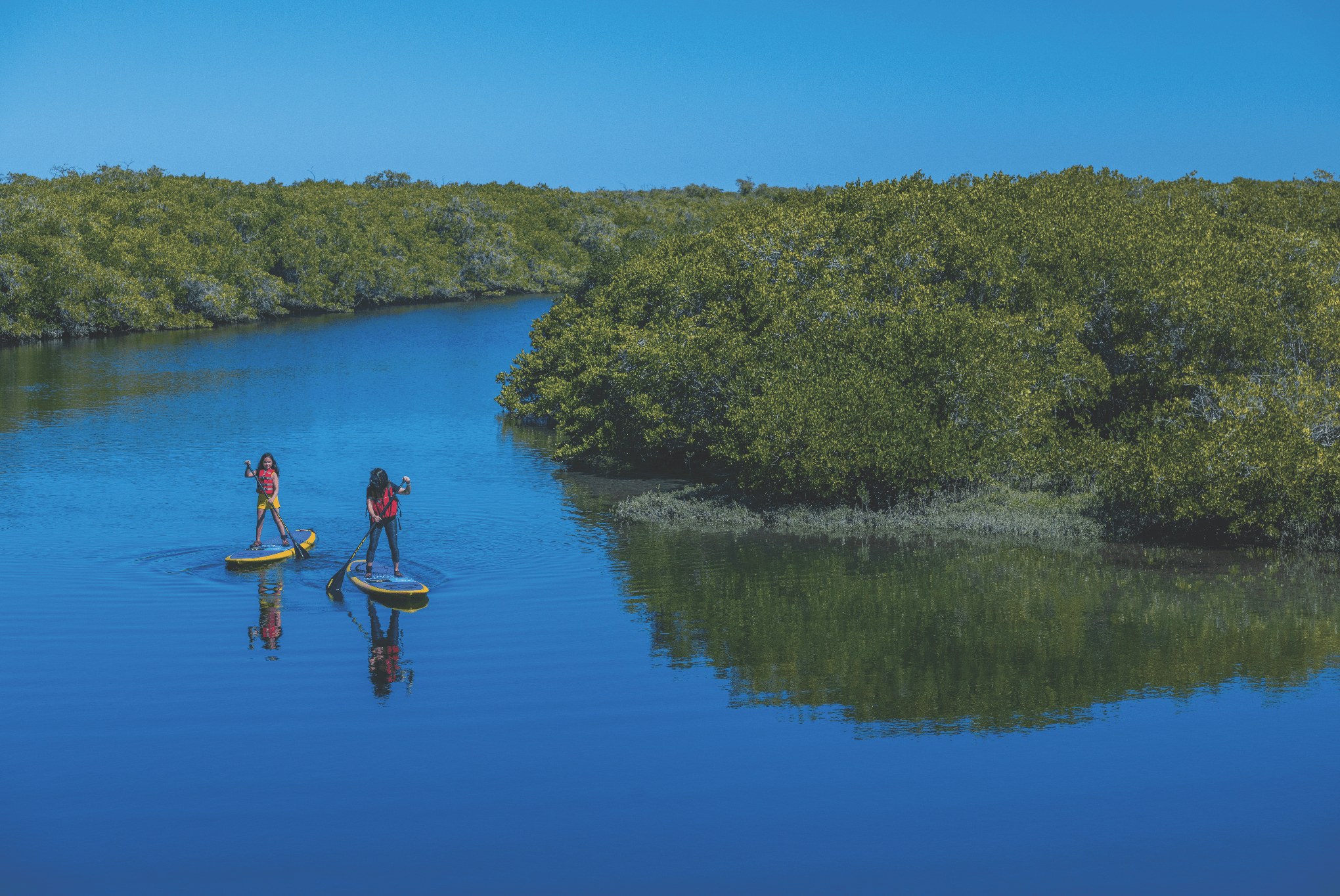
Miles of mangrove-lined channels meet a backdrop of blue skies and rugged desert dunes in this wetland locals call “El Barril.” Kayaking or paddleboarding through the aquatic forest of the Hull Canal, birders are in for a real treat. Egrets, cormorants, and herons alight on mangrove branches, while willets, curlews, and ibises comb the shallow sand at the water’s edge for an invertebrate snack. The luckiest will spot one of Baja California’s most beautiful birds, the mangrove warbler. This shy, yellow-feathered songbird is found only in the healthiest mangrove forests of Mexico and Central America.
View Baja California Itineraries >
Photo: David Vargas
Amami-Oshima Island, Japan
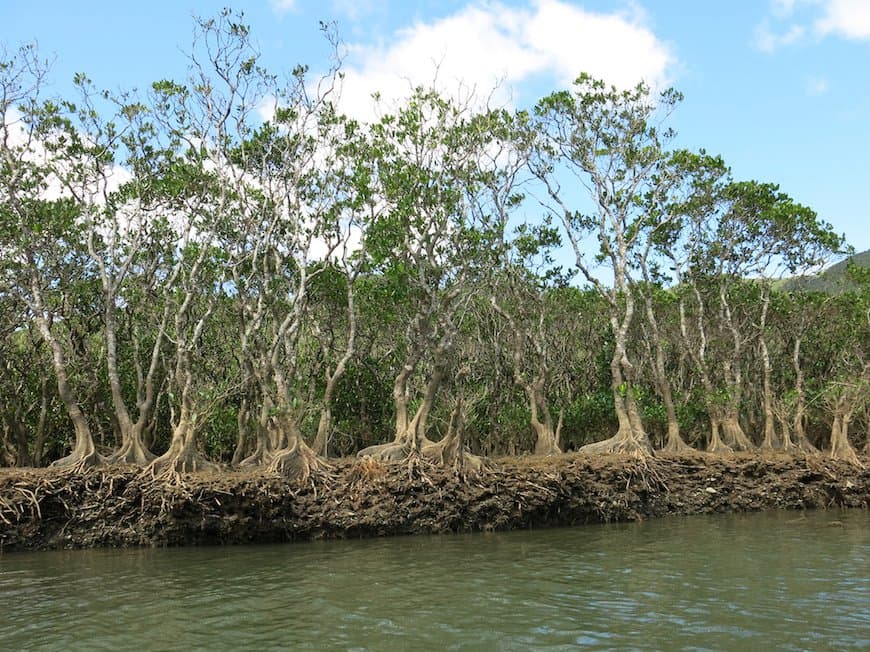
This subtropical paradise is part of Japan’s newest World Natural Heritage Site, inscribed in 2021 to protect its many endangered and endemic species like the dark-furred Amami rabbit. At Kuroshio no Mori Park, hop in a kayak during high tide to explore the winding waterways of a dense, primeval mangrove forest. As the tide goes out, the scenery shifts entirely, exposing the mud flats and their fascinating crew of creatures. Make sure to scan the water’s surface for the frog-like face of the barred mudskipper, a fish as amphibious as the ecosystem itself.
Asmat Region, Papua New Guinea
On New Guinea’s southwestern coast is a massive mosaic of mangrove wetlands where tidal tendrils can reach 100 miles inland during the rainy season. The indigenous Asmat tribes—who have inhabited this land alongside crocodiles, crabs, and cockatoos for millennia—have a spiritual connection with the mangroves. Legend has it that their creator carved mangrove roots into human-like figurines to bring the Asmat people to life; the deceased are honored with similarly inspired ritual. In bis pole ceremonies, master carvers sequester themselves to turn the mangrove’s upended trunk into intricate totems.