5 Things You Didn’t Know About Norfolk Island, a Former Penal Colony in the Remote Pacific
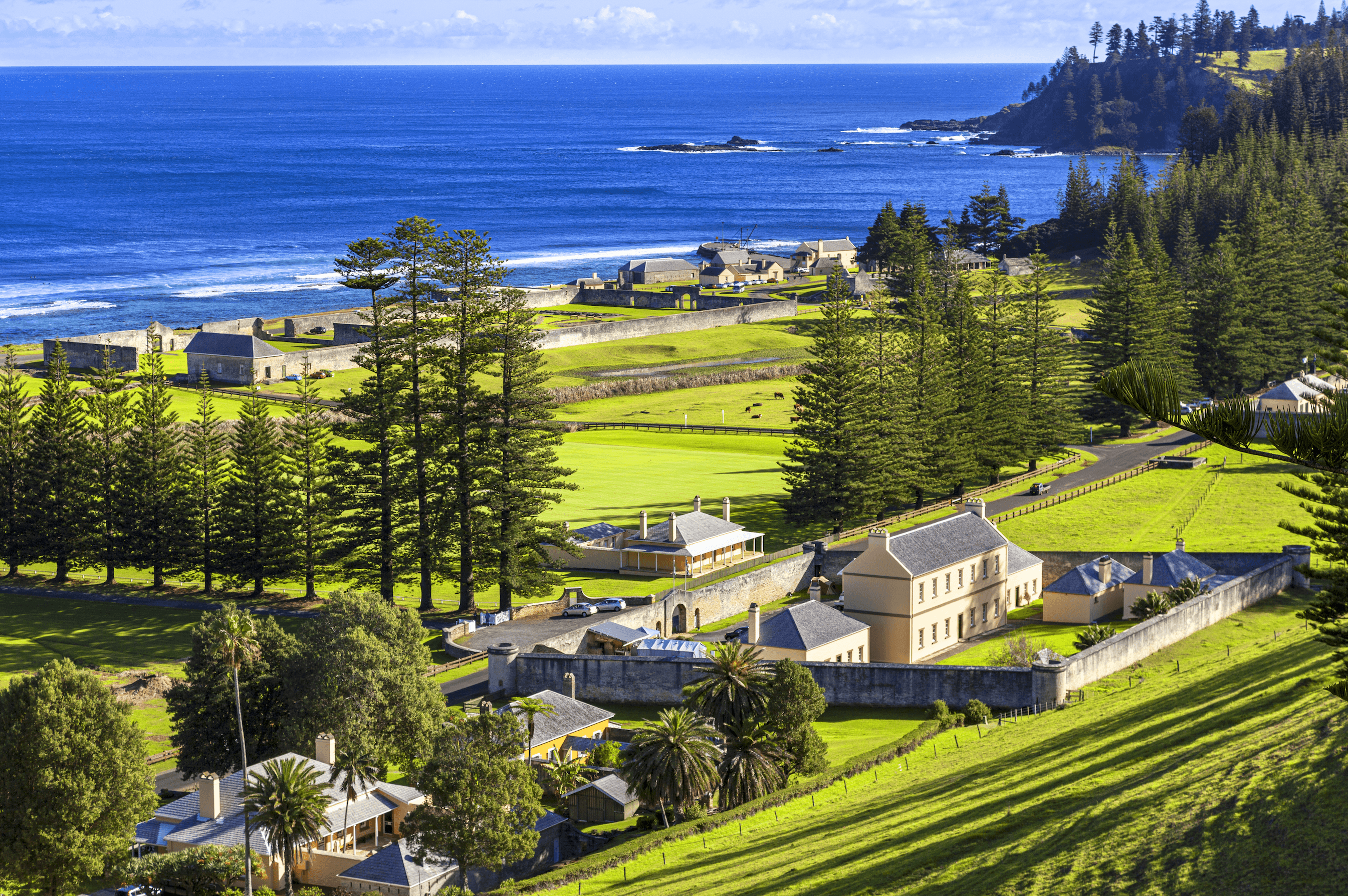
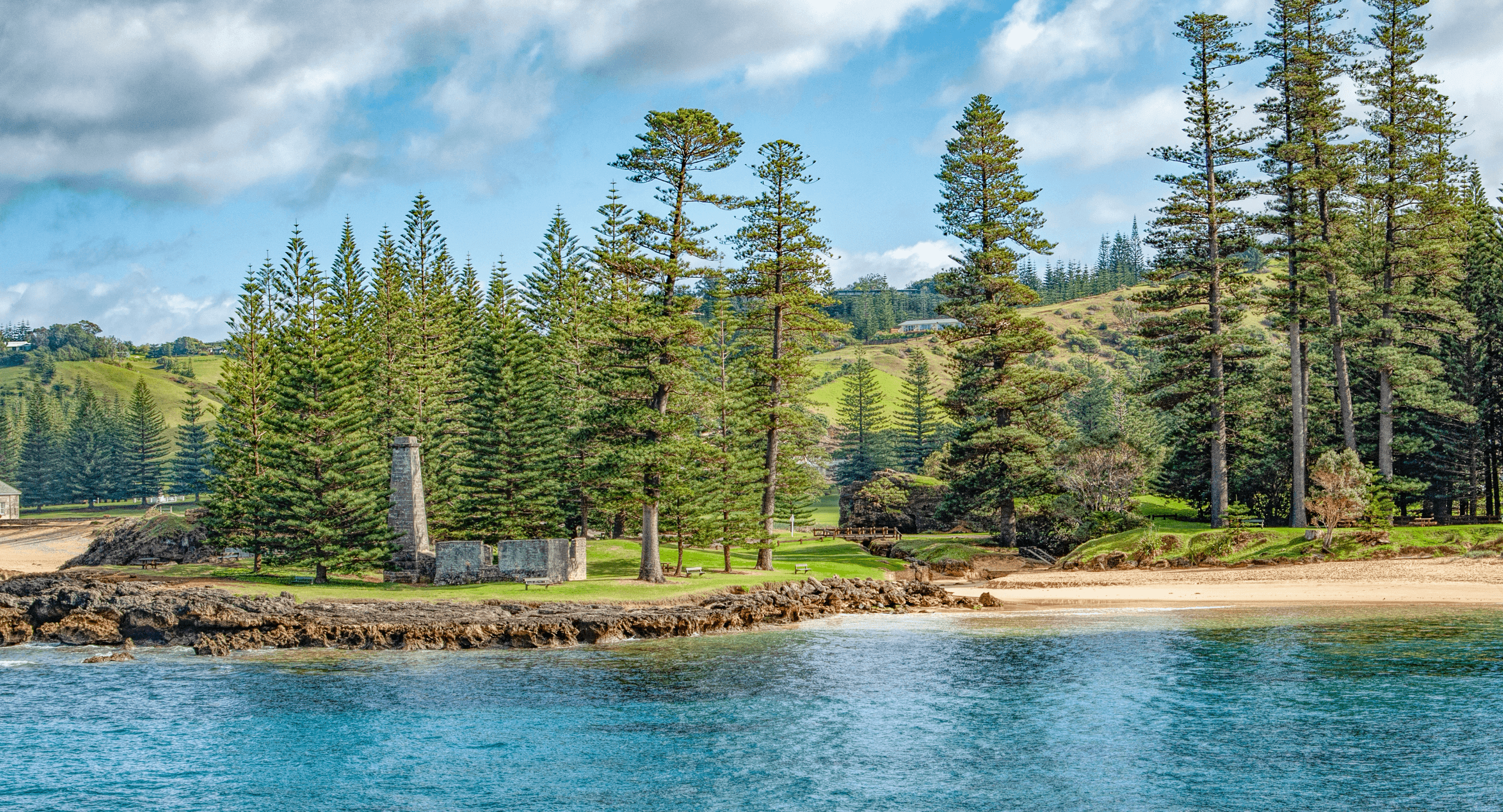
Roughly equidistant to Brisbane, Auckland, and New Caledonia, Norfolk Island packs an extraordinary amount of intriguing history and natural beauty into its 13 square miles. Basalt cliffs drop to the ocean and cows have the right of way on this remote Australian-flagged island where there’s one K-12 school and residents rarely lock their doors.
Although there is evidence of early Polynesian settlement, when Captain Cook landed on Norfolk in 1774, it was uninhabited. Thus began colorful chapters of history that include mutineers and convicts, fame and infamy.
With all the action on land, don’t forget to look up for world-renowned stargazing as you sail away in the evening. Hundreds of miles from the closest populated landmass, Norfolk’s astonishing night sky has no light pollution for clear viewing of celestial phenomena like the Southern Cross, Milky Way, and Magellanic clouds. Here are five things to know about this fascinating island.
Half the Residents Are Descendants of HMS Bounty Mutineers
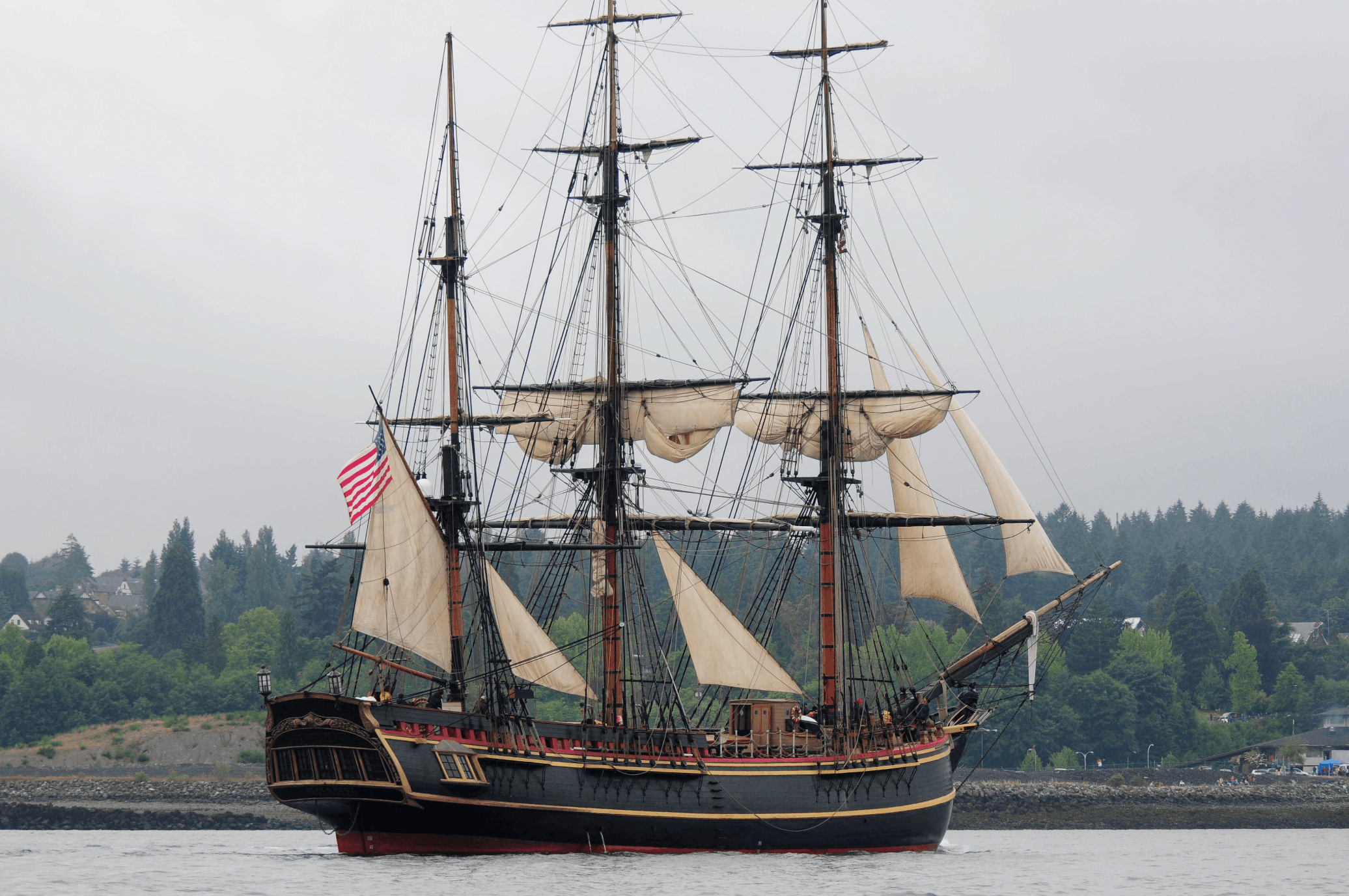
After Christian Fletcher and his followers aboard the British ship HMS Bounty overthrew the abusive Captain William Bligh in 1789, some settled in Tahiti and others on Pitcairn Island. In 1856, the descendants of the Pitcairn settlers outgrew the two-square-mile island, and 196 of them relocated to Norfolk Island. Today, half of Norfolk’s 2,000 residents can trace their heritage to the mutineers and their Polynesian partners. There’s even a museum with Bounty artifacts and the annual Bounty Day celebration marks the June 8 arrival of the Pitcairn resettlers. Fun fact: Due to the shared heritage of many residents and their resulting shared last names, nicknames (e.g., Biddy & Dids, Storky & Fishy) can be found in the telephone directory.
Photo: A replica of the infamous HMS Bounty
It Was Once a Notorious Penal Colony
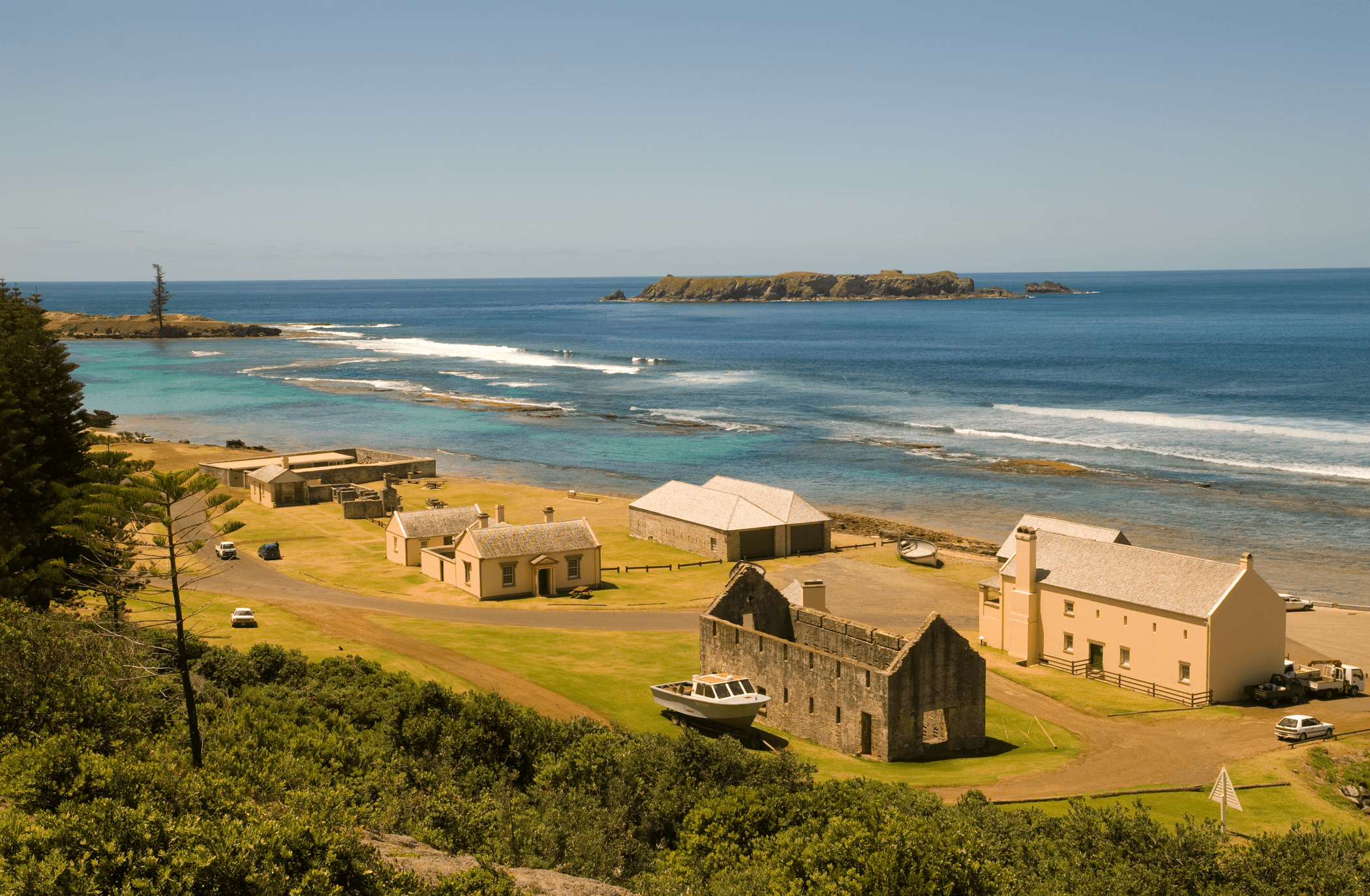
More than 166,000 British citizens were condemned to convict colonies in Australia between 1787 and 1868, and of the country’s thousands of penal colonies, none was as notorious as Norfolk’s. The island’s first penal colony was mostly agricultural; however, the one that followed from 1825-1855, housed repeat offenders and earned the epithet “Hell in the Pacific.” It was reported that criminals preferred the death sentence to incarceration on Norfolk due to its reputation for torture, hard labor in shackles, and poor living conditions. The 250-acre site in Kingston is one of 11 Australian Convict Sites recognized by UNESCO and when you visit with Lindblad Expeditions-National Geographic, there will be opportunities to explore the area further on a Convict Heritage Tour, Bridal Track Coastal Walk, or by visiting the Museum World of Norfolk.
Locals Speak Their Own Language
Norfolk has two official languages: English and Norfuk, which is a blend of 1700s-era English and Tahitian. The original Bounty mutineers and their Tahitian consorts developed a creole language that is still used today by their descendants. There are noticeable links to Scots in pronunciation, and to Tahitian, as in the structure of words using reduplication like hoowi-hoowi, meaning “filthy.” “Gud mornen” is easily translated as “good morning,” but if a local asks “Watawieh yorlye?,” reply with “Fine, thank you,” as you are being asked “Hello, how are you all?”
The Tallest Fern Trees on the Planet Grow Here
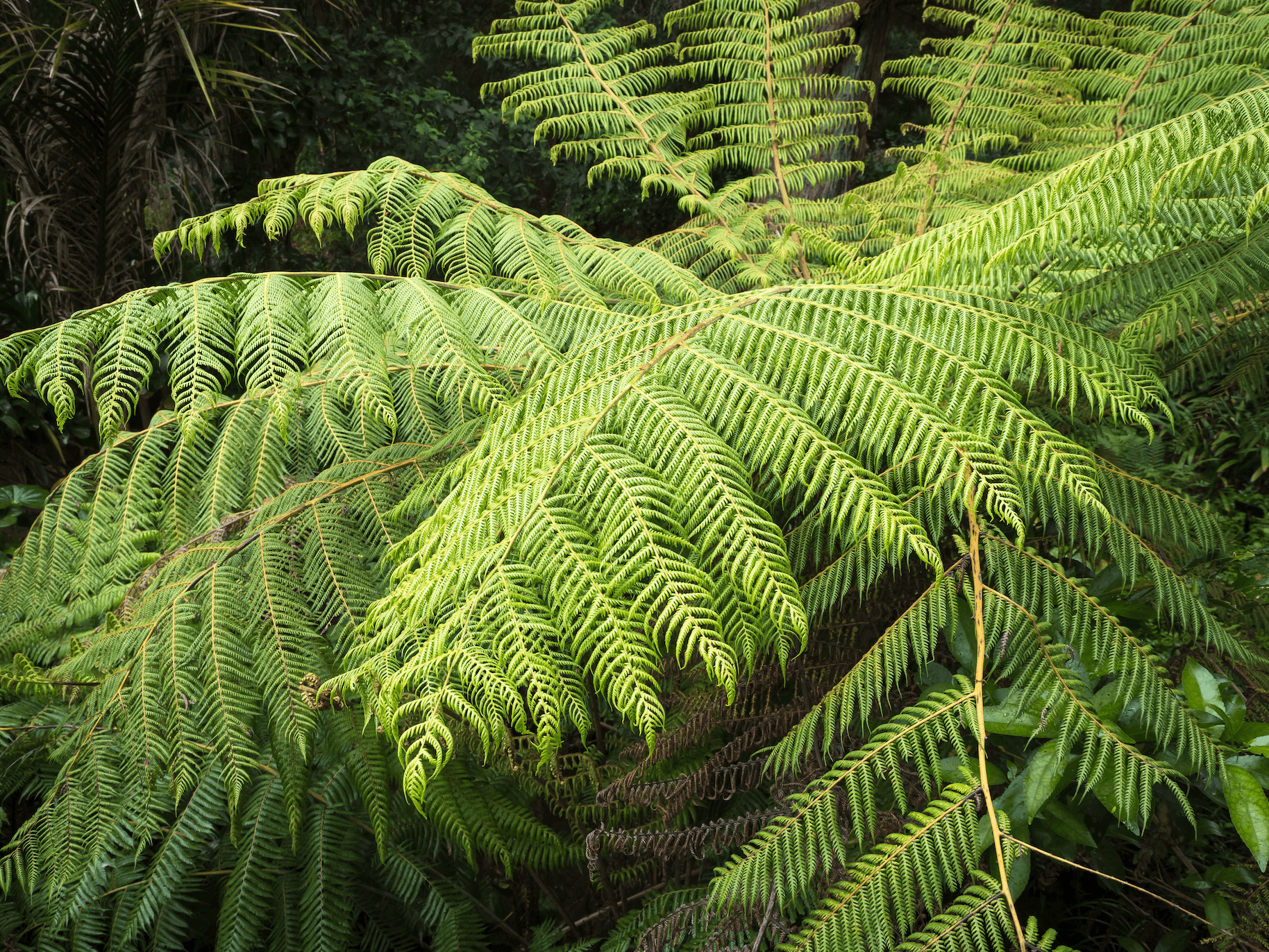
This tiny island with mild subtropical weather has several notable tree species like the Norfolk pine and Moreton Bay fig tree, but one that looks like it comes straight from the pages of a Dr. Seuss book is the Norfolk Island Tree Fern. Endemic to the island and growing to upwards of 65 feet, it is the world’s largest tree fern. Once much more prevalent throughout the island, this unique tree with fronds that reach 16 feet is protected in the Norfolk Island National Park and Botanic Garden.
You Can Check Some Incredibly Rare Birds Off Your List Here
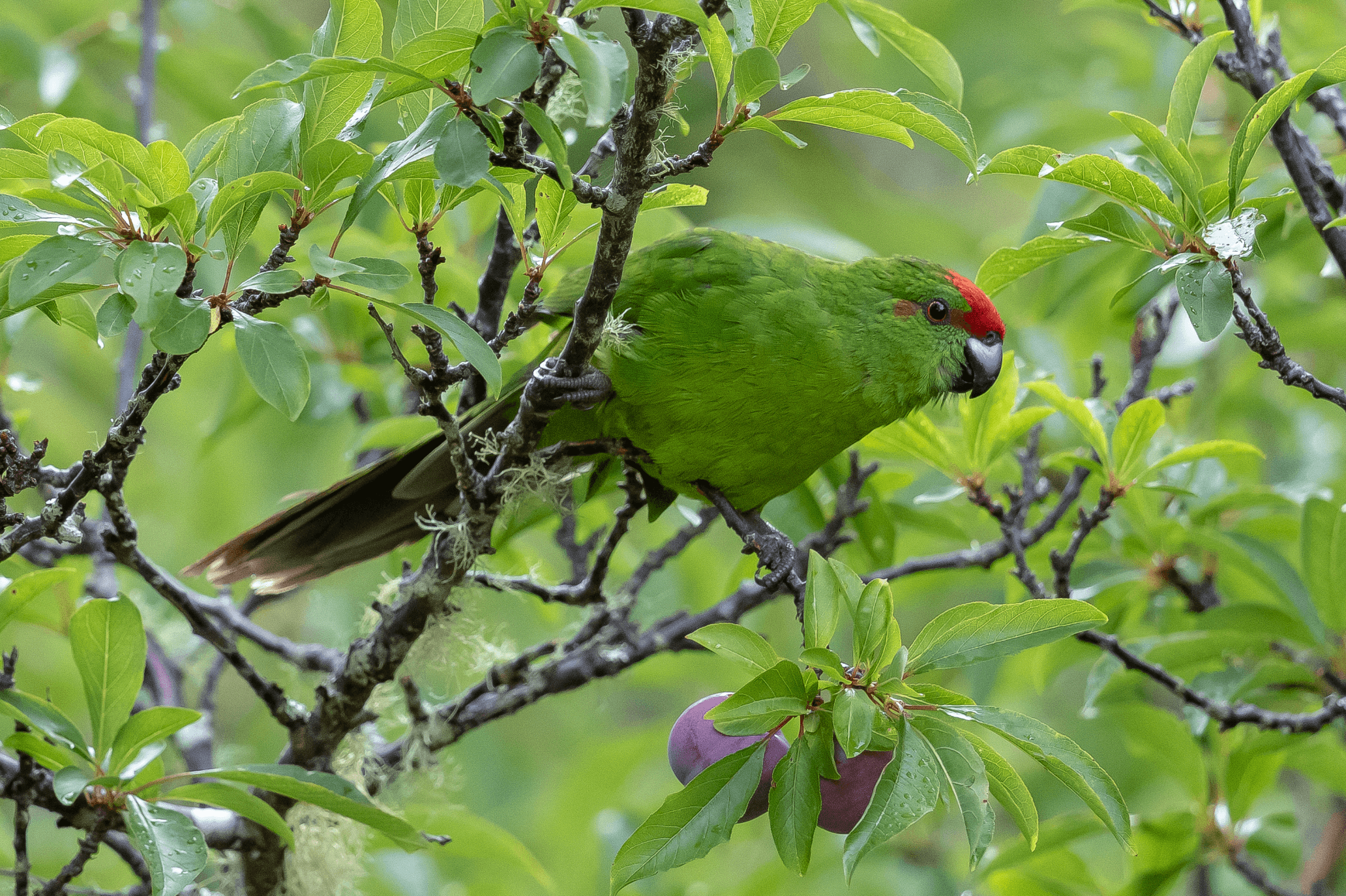
The symbol of Norfolk Island is the green parrot, which like many of the island’s 116 bird species, is found nowhere else on the planet. This colorful endemic species was brought back from near extinction along with the morepork owl, itself formerly one of the rarest species in the world. Some other birds to look for include masked boobies, red-tailed tropicbirds, and sacred kingfishers. Committed ornithologists will want to download the island’s bird app which provides in-depth information about many of the local species.